Why Frame Alignment Is Critical After a Collision
After an accident, it is easy to focus on the visible damage first: dents, cracked paint, broken lights, or a bumper hanging out of place. But some of the most important damage is the kind you cannot see right away. Frame alignment is one of the most critical parts of collision repair because it restores the structural foundation of the vehicle, helping protect occupants, preserve drivability, and return the car to manufacturer standards.
Even a low-speed impact can shift a frame enough to affect steering, tire wear, sensor performance, and crash protection. Modern vehicles are built with tightly engineered crumple zones and safety systems, which means proper frame straightening is not just cosmetic work. It is a safety service that supports the whole repair process, especially when combined with professional collision repair and post-repair verification.
In this guide, we will explain what frame alignment is, why it matters after a collision, how technicians diagnose damage, and what today’s technology is changing in the repair process. We will also cover common warning signs, insurance questions, and how advanced repair services like post-alignment calibration and post-collision ADAS calibration fit into a complete repair plan.
What Frame Alignment Really Means
The structural role of the vehicle frame
The frame is the structural base that supports the body, suspension, engine components, and safety systems. On some vehicles, this is a separate chassis; on others, it is part of a unibody structure. When a collision bends or twists this structure, the vehicle may no longer sit, drive, or protect passengers the way it was designed to.
Proper alignment restores the correct dimensions so that the car tracks straight, the suspension operates as intended, and the energy from a future impact can be distributed correctly. According to the National Highway Traffic Safety Administration, vehicle crashworthiness depends heavily on how well the structure manages impact forces, which is why hidden damage should never be ignored. You can learn more about crash safety principles through NHTSA vehicle safety resources.
Frame alignment vs. wheel alignment
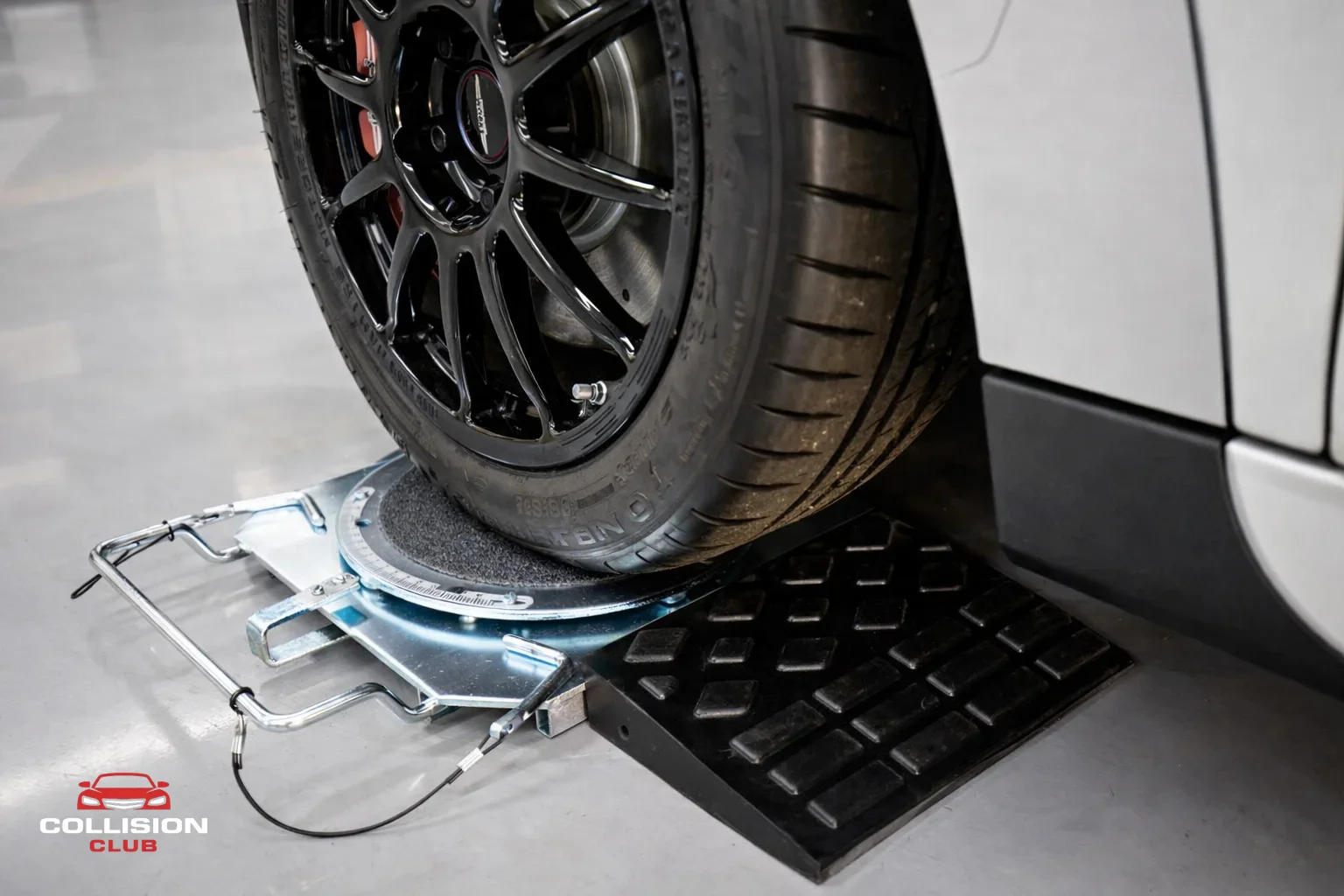
Many drivers confuse frame alignment with wheel alignment, but they solve different problems. Wheel alignment adjusts the angles of the tires and suspension so the vehicle rolls evenly. Frame alignment corrects the underlying structure that the suspension attaches to, which is why a wheel alignment alone will not fix a bent frame.
If the frame is off even slightly, the suspension may never align properly, and the vehicle may continue pulling, vibrating, or wearing tires unevenly. For that reason, frame issues often need to be addressed before a final wheel alignment, or windshield and camera calibration after glass replacement can be considered complete.
Why a Misaligned Frame Is a Safety Problem
Impact absorption depends on the structure.
One of the biggest dangers of frame damage is the loss of impact management. Modern vehicles are designed with specific load paths that absorb and redirect crash energy away from occupants. If the frame is bent, that energy may travel in the wrong direction during a future collision, reducing protection when it matters most.
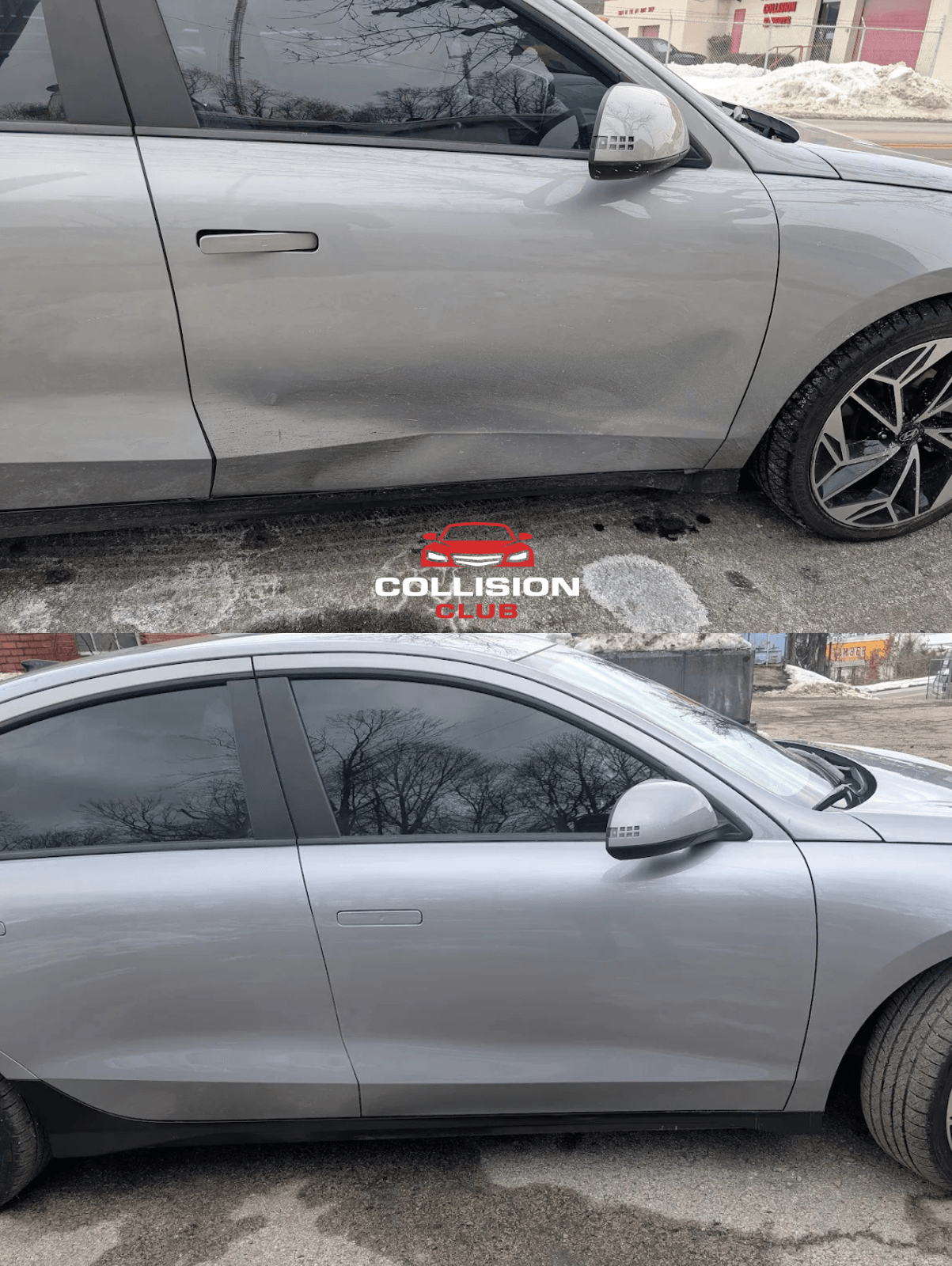
Industry experts consistently note that structural misalignment can compromise both repair quality and occupant safety. In a collision repair article, professionals explain that a misaligned frame can reduce the vehicle’s ability to absorb and distribute energy effectively, increasing the risk of severe injury in another crash. That is why repairs should be completed by trained technicians who understand structural measurements, not just body panel replacement. For related repair guidance, readers may also find our before-and-after collision repair guide helpful.
Steering, handling, and tire wear issues
When the structure is not square, the suspension geometry changes. That can create symptoms such as a steering wheel that sits off-center, a vehicle that drifts left or right, and tires that wear unevenly even after a standard alignment. These signs are frustrating for drivers because they often appear after the repair claim is already closed, when it becomes more difficult to address hidden issues.
In practical terms, a misaligned frame can make the vehicle feel unstable at highway speeds or during braking. It can also place extra stress on suspension parts and reduce fuel efficiency because the car is working harder to move in a straight line. If you are noticing these problems after a fender bender, a professional diagnosis is the safest next step, especially before more damage spreads to surrounding components.
ADAS and sensor accuracy can be affected
Today’s vehicles rely on advanced driver-assistance systems, including lane keep assist, adaptive cruise control, emergency braking, and blind spot monitoring. These systems depend on the exact placement of cameras, radar units, and other sensors. If the frame is out of spec, those systems may no longer point in the correct direction, which can undermine their reliability.
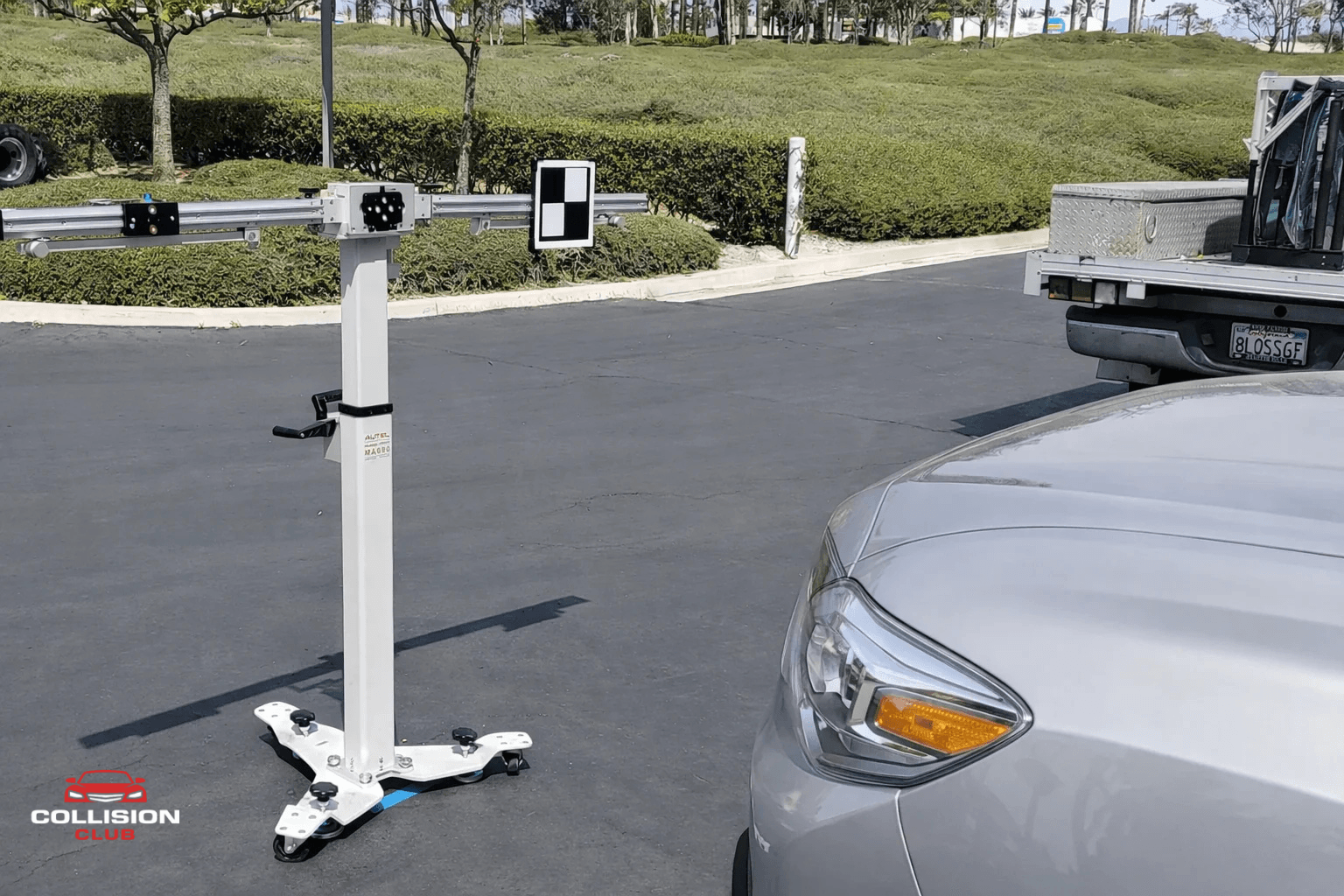
That is why frame alignment often goes hand in hand with static ADAS calibration or dynamic ADAS calibration. A structural issue must be corrected before the sensors can be calibrated accurately. If your vehicle has had glass or camera work, you may also need windshield/camera calibration after glass replacement to restore safe operation.
How Collision Repair Shops Diagnose Frame Damage
Visual inspection is only the first step.
Experienced technicians begin with a careful visual inspection, but frame damage is rarely confirmed by eye alone. Gaps between doors, a hood that does not close evenly, unusual suspension angles, and uneven panel fit can all hint at deeper structural problems. However, the most accurate diagnosis comes from measurement systems that compare the vehicle to factory specifications.
This is where quality collision repair separates itself from quick cosmetic repairs. A car can look acceptable from the outside while still having structural issues beneath the surface. That is why a complete evaluation should include both body measurements and a road test when appropriate, especially after moderate to severe impacts.
3D scanning is changing the repair process
One of the biggest trends in the industry is the rapid adoption of 3D scanning. According to recent industry data, the use of 3D scanning for frame measurement increased by 35% year-over-year and reached 62% of U.S. shops by 2023. This technology gives technicians a far more precise view of distortion, allowing them to measure subtle shifts in real time rather than relying on older manual methods alone. The statistic is highlighted by industry research on auto body repair trends.
3D scanning improves accuracy, speeds up diagnosis, and helps support better repair documentation for customers and insurers. It also reduces the chance of missing hidden damage in complex collisions. For modern vehicles with high-strength steel, aluminum components, and integrated sensors, that precision is especially valuable.
Measurement systems help guide repairs.
Once damage is identified, technicians use measuring equipment to compare the vehicle’s current shape with the original manufacturer's data. These systems can identify whether the frame is pushed, pulled, twisted, or raised in a particular section. From there, a repair plan is created to bring the structure back within specification.
This process is especially important when a vehicle needs more than cosmetic restoration. For example, after a strong side impact, the frame may require straightening before body panels, bumpers, and paint work can be completed. If the structural foundation is not corrected first, later repairs may not fit properly or last as long as expected.
The Frame Straightening Process Step by Step
1. Inspect and document the damage
The repair process begins with a full assessment, including notes, photos, and measurements. This documentation helps establish what needs to be repaired and supports the insurance process when applicable. It also creates a baseline for comparing the vehicle before and after repair.
In many cases, technicians will review visible damage alongside scan results and structural readings. This is also the stage where customers may be advised about related services such as insurance claims assistance or supplemental repairs for hidden damage. Good documentation makes the entire process smoother and more transparent.
2. Secure the vehicle on a frame machine
After diagnosis, the vehicle is placed on a frame machine or similar equipment that stabilizes the structure during repair. This setup allows technicians to apply controlled force in the right direction while measuring progress carefully. The goal is to return the frame to factory dimensions without creating additional stress points.
Because different vehicles use different metals and construction methods, the approach must be tailored to the specific model. A full-size SUV, for example, may need a different repair strategy than a compact sedan or a vehicle with advanced aluminum body sections. Precision and patience matter more than speed.
3. Straighten, measure, and remeasure
The actual correction stage may involve pulling, pushing, heating, or replacing damaged components, depending on the severity of the collision. Technicians make small adjustments and remeasure repeatedly to confirm progress. This step-by-step process is critical because overcorrection can be just as problematic as undercorrection.
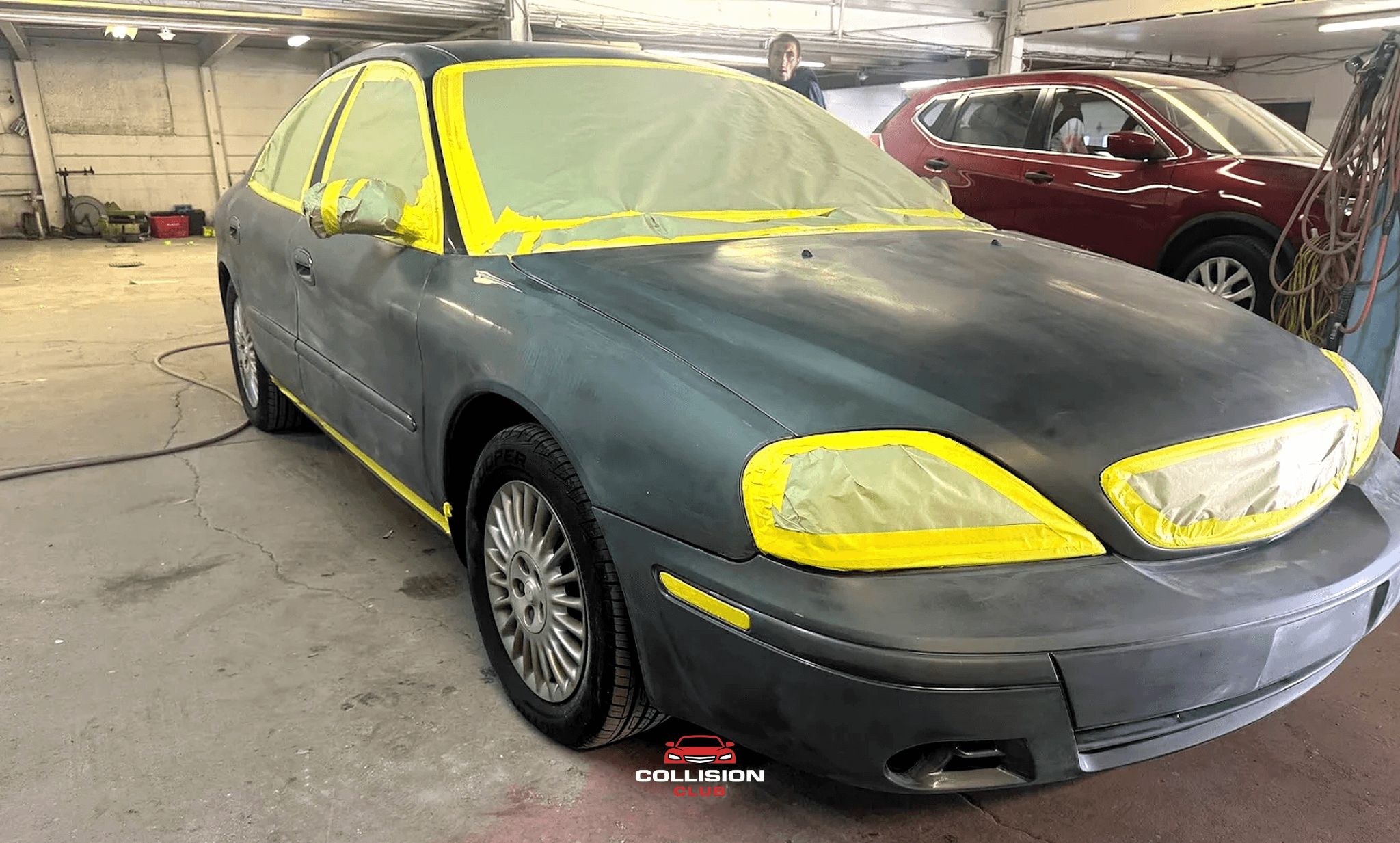
Once the frame is back within tolerance, related repairs can begin. That may include bumper repair, panel replacement, dent removal, refinishing, and reassembly. If rust or corrosion is present from prior damage, rust repair and refinishing may also be necessary to protect long-term structural integrity.
4. Reassemble and verify
After structural repair is complete, technicians reassemble the vehicle and check panel fit, ride height, steering response, and warning systems. If the vehicle has ADAS features, calibration is performed or verified at this stage. This final validation helps ensure the repair is not only visually correct but also mechanically and electronically sound.
For many drivers, this step is the difference between a car that simply looks repaired and one that is truly road-ready. A careful final inspection helps avoid comebacks, reduces safety risks, and gives the owner confidence that the vehicle has been restored properly.
Signs Your Vehicle May Need Frame Alignment
Visible and drivability warning signs
Not every frame issue is obvious, but there are common clues drivers should watch for. Uneven gaps around doors, trunk, or hood panels often suggest the body is no longer sitting square. Steering wheel off-center, pulling to one side, strange vibrations, and unusual tire wear are also common red flags.
If you notice these signs after a collision, do not assume a tire rotation or standard alignment will solve the issue. The underlying structure may be damaged, and the sooner it is checked, the more likely it is that the repair will remain manageable. A quick inspection can prevent a small problem from becoming a much more expensive one.
When minor accidents cause hidden damage
Many drivers are surprised that a parking-lot hit or low-speed crash can still bend the frame. Modern vehicles are engineered to absorb energy in specific ways, so even a small impact may deform hidden areas. What looks like a minor cosmetic issue may actually involve structural misalignment beneath the panels.
This is why post-accident inspections are so important, even when the car seems mostly fine. For a deeper look at how seemingly small damage can affect safety and value, see our related article, Beyond the Dents. That mindset is especially useful when deciding whether to schedule a full structural evaluation.
How Technology Is Improving Frame Alignment
Precision tools are reducing guesswork.
Repair technology has advanced quickly in recent years. Digital measuring systems, laser-based tools, and 3D scanning now help technicians detect problems that older methods may have missed. The result is a more efficient repair process with fewer surprises during reassembly.
These improvements are important because the margin for error is smaller on modern vehicles. Many models have complex safety structures, multi-material construction, and integrated electronics that require exact alignment. Better tools lead to better outcomes, which is why shops investing in modern equipment are often better equipped for today’s collision repairs.
Industry growth reflects the demand for accuracy.
Frame alignment systems continue to gain importance in the market because insurers, automakers, and consumers all expect higher repair standards. A market study from Fortune Business Insights notes that automotive frame alignment systems are critical for straightening, correcting, and aligning a vehicle’s chassis after an accident. That demand reflects a broader shift toward more data-driven and accountable repair methods. Read more from Fortune Business Insights.
For consumers, this means choosing a shop that understands both structural repair and the technology needed to verify it. For technicians, it means continuous training and investment in updated equipment. For vehicles, it means a better chance of returning to factory performance and safety standards.
Repair quality depends on calibration, too.
Frame alignment should never be treated as a standalone service when the vehicle includes advanced electronics. After structural repairs, post-repair calibration ensures that cameras, radar, and other safety systems are synchronized with the new geometry of the car. Without calibration, even a perfectly straight frame may still leave the vehicle operating with inaccurate information.
This is why comprehensive collision repair often includes both structural work and electronic validation. Services such as mobile ADAS calibration service can add convenience in some situations, while in-shop calibration may be necessary for complex repairs. The repair plan should always match the vehicle’s needs, not just the visible damage.
Insurance, Cost, and Repair Timelines
Is frame alignment covered by insurance?
Coverage depends on your policy, the type of claim, and how the damage occurred. In many collision claims, frame repair is included if the damage is a direct result of the covered accident. However, deductibles, supplements, and policy limits can all affect the final out-of-pocket cost.
Because hidden damage is common, initial estimates may need to be updated once the vehicle is disassembled and measured. That is normal in collision repair. Clear communication with your insurer and repair shop can help avoid delays and make sure the necessary structural work is approved before reassembly begins.
What affects the time required
The time needed for frame alignment depends on the severity of the damage, the vehicle design, and whether replacement parts are needed. A simple correction may be completed relatively quickly, while a complex structural repair can take much longer. Vehicles with mixed materials, advanced electronics, or hard-to-source parts may require additional time for proper restoration.
Drivers should be cautious about any shop promising an unusually fast structural repair without a detailed assessment. Quality collision repair is measured by accuracy and safety, not by speed alone. If the car also needs bumper, dent, paint, or rust work, those services can add time, but are often necessary for a complete result.
Choosing the Right Repair Shop for Structural Work
What to look for in a collision repair facility
Not every shop is equally equipped for frame alignment. The right facility should have structural measuring tools, trained technicians, and a process for documenting repairs from start to finish. It should also be transparent about what is damaged, what can be repaired, and what may need replacement.
Look for a shop that explains the repair plan clearly and answers questions without pressure. If your vehicle has modern safety features, ask how the shop handles calibration and final verification. A reputable team will understand that frame alignment and electronic systems must be restored together to achieve a safe, complete repair.
Why integrated repair services matter
Structural damage often overlaps with other services, which is why integrated repair matters so much. A vehicle that has been hit hard may need body repair, paint refinishing, bumper repair, dent removal, and calibration work all in one sequence. When those services are coordinated by one team, the repair is usually more efficient and consistent.
For local drivers, that can mean fewer handoffs, better communication, and less risk of missing a critical step. If you need a full-service solution, our bumper repair and paint service can help restore appearance after structure and alignment issues are addressed. This is especially important when the goal is to return the car to pre-accident condition, not simply make it look acceptable from a distance.
Local expertise can make the process easier.
Working with a shop that understands the needs of Philadelphia drivers can simplify the repair experience. From navigating insurance to coordinating structural work and calibration, a local collision repair team can guide you through the process with less stress. If you are looking for a trusted place to start, our Philadelphia auto body repair location is here to help with detailed assessments and professional service.
For some drivers, a lease vehicle or resale concern may also affect repair decisions. In those cases, services like lease return prep can be useful once the structural work is complete. The right strategy depends on your goals, the vehicle’s condition, and how much damage occurred in the collision.
Frequently Asked Questions About Frame Alignment
How can I tell if my vehicle’s frame is misaligned?
Common signs include uneven tire wear, a steering wheel that is not centered after alignment, drifting while driving straight, and visible gaps between doors, hood, or trunk. If the vehicle feels different after a collision, do not dismiss it as minor. A professional inspection is the safest way to confirm or rule out structural issues.
How long does frame alignment take?
The time varies based on the amount of damage and the vehicle model. Some repairs can be completed quickly, while others require several stages of measurement, straightening, replacement parts, and calibration. A proper estimate should come after an inspection, not before.
Can I drive with a bent frame?
It is not recommended. Driving with structural damage can worsen existing problems, affect handling, and reduce crash protection if another accident occurs. If the car is pulling, vibrating, or showing panel misalignment, have it checked before continuing to drive it regularly.
Is frame alignment worth it on an older car?
In many cases, yes, especially if the vehicle is still reliable and the repair cost makes sense compared with replacement. Frame alignment can restore safety, drivability, and value. A technician can help you compare repair options and decide whether structural restoration is the best path forward.
Why Frame Alignment Should Never Be Overlooked
It protects safety, performance, and value.
Frame alignment is one of the most important parts of collision repair because it affects everything else the vehicle does. A straight frame helps protect passengers in a future crash, keeps the car driving correctly, supports suspension geometry, and allows modern safety systems to operate as intended. When the structural base is correct, every other repair has a better chance of lasting.
Ignoring frame damage can create long-term headaches, including uneven wear, alignment issues, and lower resale value. It can also leave hidden safety risks in place long after the body panels have been repaired. That is why experienced technicians treat framework as a core safety service rather than an optional extra.
Restoring the vehicle means restoring confidence.
After a collision, drivers want more than a clean-looking car. They want confidence that the vehicle will brake properly, steer correctly, and protect them when needed. That confidence comes from a complete repair process that addresses structure, appearance, and technology together.
If your vehicle has been in an accident, the smartest next step is a thorough inspection from a qualified collision repair team. Whether you need structural straightening, ADAS calibration, or full refinishing, a complete repair plan is the best way to get back on the road safely. To speak with a professional team about your repair needs, contact Collision Club | Auto Body Shop Philadelphia at (267) 297-7034 or visit us at 5091 Umbria St, Philadelphia, PA 19128.
Need expert help after a collision? Schedule a professional inspection today and make sure your vehicle is restored with the precision, safety, and quality it deserves.